 Telehub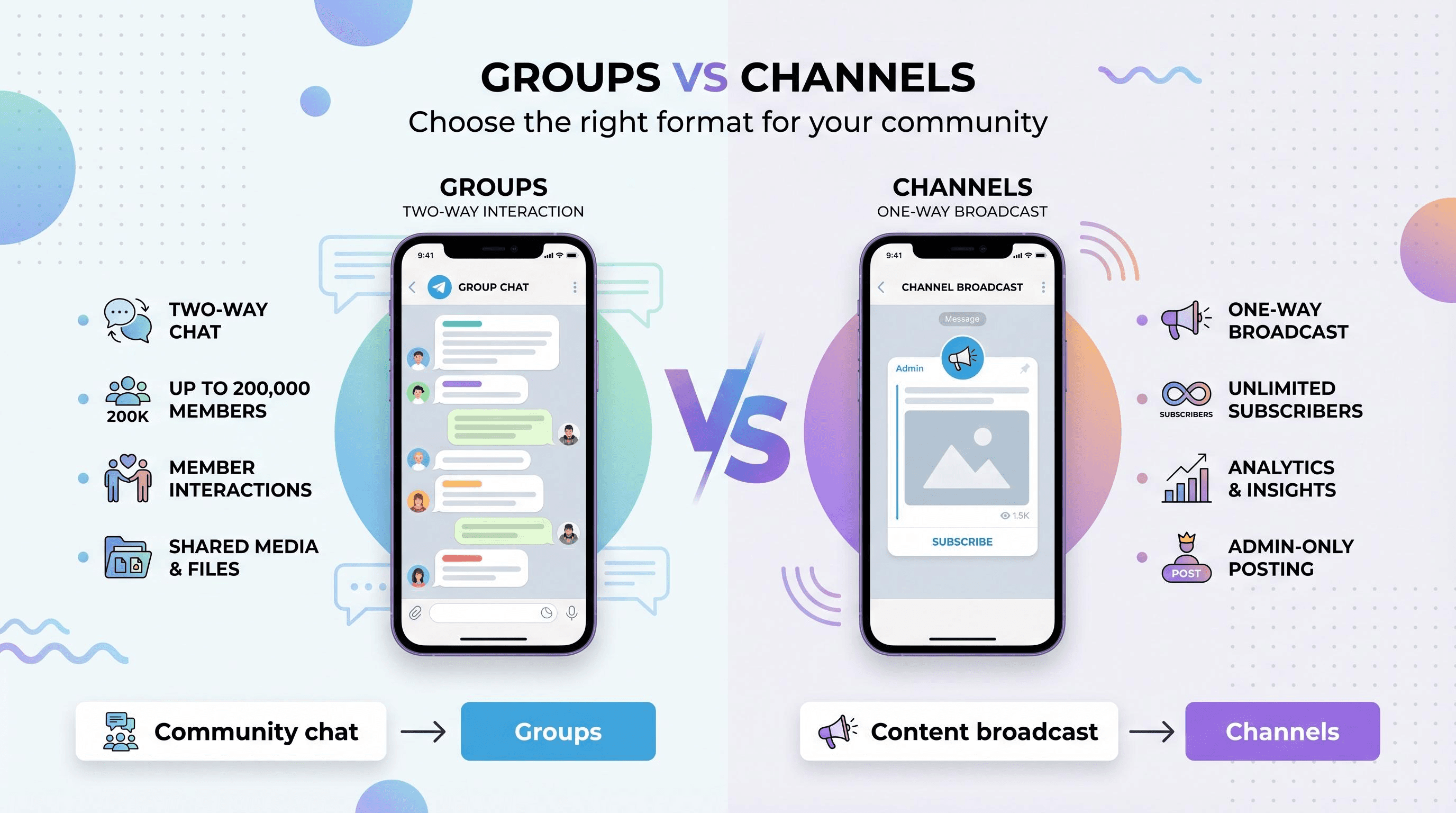
What Is a Telegram Channel?
A Telegram channel is a broadcast tool. It lets admins publish posts to subscribers without every subscriber being able to reply directly in the main feed.
Think of a channel like a public announcement page. The owner posts updates, and subscribers follow along. This makes channels useful for news pages, creators, brands, businesses, deal alerts, crypto updates, product launches, and content feeds.
The biggest strength of a channel is control. Since only admins can post, the content stays clean and organized. There is no messy group chat, no random off-topic messages, and no need to moderate every subscriber’s comments.
Channels can also be public or private. A public channel can have a username and be searchable, while a private channel usually requires an invite link.
What Is a Telegram Group?
A Telegram group is made for conversation. Instead of only admins posting, members can usually send messages, reply to each other, share media, and participate in discussions.
Groups are best when you want members to feel like they are part of a real community. They work well for study groups, gaming communities, startup circles, local communities, support chats, creator fan groups, and topic-based discussions.
Unlike channels, groups are not mainly about broadcasting. They are about interaction. Members can ask questions, help each other, and keep the community active even when the owner is not posting.
That also means groups usually require more moderation. If the group grows, admins may need rules, pinned messages, spam filters, and permission settings to keep everything clean.
Telegram Channel vs Group: Quick Comparison
Here is the easiest way to understand the difference:
Feature | Telegram Channel | Telegram Group |
|---|---|---|
Main purpose | Broadcasting updates | Community discussion |
Who can post? | Usually admins only | Members and admins |
Best for | News, announcements, content feeds | Conversations, support, communities |
Audience type | Subscribers | Members |
Engagement style | Mostly one-way | Two-way discussion |
Moderation needed | Lower | Higher |
Public or private? | Both | Both |
Best growth method | Consistent posting and shares | Active conversations and member invites |
A channel is better when you want clean content delivery. A group is better when you want member interaction.
That single difference matters more than almost every other feature.
When You Should Use a Telegram Channel
Use a Telegram channel when your main goal is to publish updates instead of hosting open conversation.
Channels are especially useful when your audience wants information without noise. For example, a news page can post breaking updates, a creator can share new content, and a business can announce product changes without hundreds of people talking over the post.
Best channel use case | Why it works |
|---|---|
News updates | Keeps posts clean and easy to follow |
Brand announcements | Avoids off-topic conversations |
Deal alerts | Users can quickly scan posts |
Creator updates | Fans receive content without chat clutter |
Educational tips | Posts stay organized over time |
A channel is also a strong choice if you care about a polished first impression. New subscribers can scroll through previous posts and instantly understand what the channel is about.
When You Should Use a Telegram Group
Use a Telegram group when your main goal is to build a community.
Groups are stronger when the value comes from the members, not just the owner. A study group becomes useful because students ask and answer questions. A gaming group becomes active because players talk to each other. A business group becomes valuable because people share resources, feedback, and opportunities.
Best group use case | Why it works |
|---|---|
Study communities | Members can ask questions and share notes |
Gaming groups | Players can organize matches and chat |
Support communities | Users can help each other |
Local groups | Members can discuss nearby events |
Niche hobby groups | Conversations keep people coming back |
Groups usually feel more personal than channels. They create a sense of “I am part of this,” instead of “I am just following this.”
The tradeoff is that groups can get messy fast. More freedom means more moderation.
Privacy and Visibility Differences
Both Telegram channels and groups can be public or private, but the user experience feels different.
A public channel is often used like a content page. Anyone can find it if they know the username or discover it through search. A private channel requires an invite link, which gives the owner more control over access.
Groups work the same way, but privacy matters more because members may be actively chatting. In a public group, new members may be able to see conversations depending on the group settings and history visibility. In a private group, access is usually more controlled.
Privacy option | Channel | Group |
|---|---|---|
Public | Good for discovery and subscribers | Good for open communities |
Private | Good for exclusive content | Good for controlled discussions |
Invite link | Used to bring in subscribers | Used to bring in members |
Search visibility | Public channels can be easier to discover | Public groups can be discoverable too |
For a directory like Telehub, both can work. A public channel is great if you want followers. A public group is better if you want active conversations.
Engagement: Which One Gets More Activity?
Groups usually create more visible activity because members can talk to each other. A healthy group might have questions, replies, reactions, pinned discussions, and returning members who keep the chat alive.
Channels can still get engagement, but it is usually more controlled. People may react to posts, view updates, or comment if the channel has discussion features enabled. Still, the main channel feed stays focused on admin posts.
Engagement type | Better option |
|---|---|
Member conversations | Group |
Clean announcement feed | Channel |
Community support | Group |
Brand updates | Channel |
Fast feedback | Group |
Organized content archive | Channel |
The simple rule is this:
Choose a channel if people mainly need to read. Choose a group if people need to talk.
For many communities, the best setup is actually both.
Final Answer: Telegram Channel or Group?
A Telegram channel is best for broadcasting. A Telegram group is best for conversation.
Choose a channel if you want to post clean updates, announcements, news, or content without every subscriber talking in the main feed. Choose a group if you want people to interact, ask questions, share ideas, and build a real community.
For creators and businesses, the strongest setup is often both: use the channel as the official feed and the group as the community space.
If you are trying to grow either one, adding it to a discovery directory like Telehub can help more people find it by category instead of relying only on random invite links or social posts.
Keep reading
Related articles
More TeleHub guides connected to this topic, updated automatically as new posts are published.

Telehub reminder